TF-VI. Social, Ethical, Legal, and Human Issues
Educational technology facilitators understand the social, ethical, legal, and human issues surrounding the use of technology in PK-12 schools and assist teachers in applying that understanding in their practice. Educational technology facilitators:
| A. |
Model and teach legal and ethical practice related to technology use. Candidates: |
|
1. develop strategies and provide professional development at the school/classroom level for teaching social, ethical, and legal issues and responsible use of technology. |
|
|
2. assist others in summarizing copyright laws related to use of images, music, video, and other digital resources in varying formats. |
|
| B. | Apply technology resources to enable and empower learners with diverse backgrounds, characteristics, and abilities. Candidates: |
| 1. assist teachers in selecting and applying appropriate technology resources to enable and empower learners with diverse backgrounds, characteristics, and abilities. | |
| 2. identify, classify, and recommend adaptive/assistive hardware and software for students and teachers with special needs and assist in the procurement and implementation. | |
C. |
Identify and use technology resources that affirm diversity. Candidates: |
| 1. assist teachers in selecting and applying appropriate technology resources to affirm diversity and address cultural and language differences. | |
D. |
Promote safe and healthy use of technology resources. Candidates: |
| 1. assist teachers in selecting and applying appropriate technology resources to promote safe and healthy use of technology. | |
E. |
Facilitate equitable access to technology resources for all students. Candidates: |
|
1. recommend policies and implement school/classroom strategies for achieving equitable access to technology resources for all students and teachers.
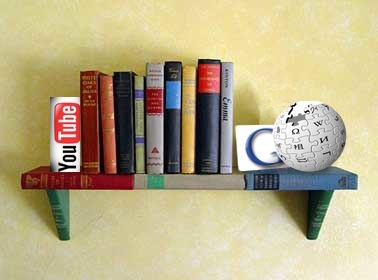
Reflections Technology has blurred the lines of ethical and unethical behavior on the web. Downloading music and videos has taken a large chunk of profit away from the entertainment industry. Unfortunately, the lines have blurred regarding what is legal and illegal. People feel if it’s available on the web it must be OK. One of the many responsibilities of the school librarian is to teach the ethical use of information. Students will easily cut and paste text into their school work and not consider it wrong. Complicating the situation, there are many famous people that have been accused of plagiarism. Some have suffered for it and some have not. When a class comes to the library for the first time to start a research project I show a power point on plagiarism. It leads to a lively discussion of what is allowed and not allowed. Students know that taking someone else’s work word for word is plagiarism. They have more difficulty with paraphrasing. They incorrectly believe that paraphrasing does not have to be cited. The accompanying PowerPoint is one that I have taken from Joyce Valenza, Springfield High School, and adapted to my own needs. When I am done with the presentation I always tell the students where I got my information and why once I give credit to the author it is then ethical and allowable to use the presentation. Many people believe if it’s on the web it must be true. At one time or another most people have
gotten an email that warns about some impending danger or vilifies a political
figure. A good amount of the time these
emails are false. Fortunately, sites
similar to Snopes.com are there to help us navigate the falsehoods on the net. Students need to be instructed in navigating
through sites and recognizing the characteristics of useful and reliable
sources. The following PowerPoint is
from Barbara DeSantis, a teacher in Sayreville, NJ. She adapted this presentation from material
provided by Alan November.
Web Literacy Plagiarism |